


How High-Intensity Cardio Improves Brain Health
Until recently, I was a reluctant exerciser. I never really enjoyed it, but I did it—sporadically—because I knew it was good for me. I envied people who genuinely looked forward to working out. How amazing it must be to truly enjoy doing something that’s also incredibly good for you. If only sugar were good for us, right? I wasn’t an exercise lover, but I am now.
What Changed?
I came across this quote in Chapter 3 of Peter Attia’s book, Outlive:
“The data are unambiguous: exercise not only delays actual death but also prevents both cognitive and physical decline, better than any other intervention.”
I’d heard him say something similar on his podcast, The Drive, about a year earlier. It was one of the first times I heard someone say, plainly, that you can lower your risk of dementia.
According to Attia, exercise is the single most powerful thing we can do to preserve cognitive function. Period. Given that both my parents died with Alzheimer’s, his statement hit me hard—in a good way. The idea that I could significantly reduce my own risk through something as accessible as exercise, completely changed how I think about working out.
Building the habit took time, but Attia’s message was the motivation I needed to begin the journey.
What High Intensity Exercise Really Means for Your Brain
When people hear “high-intensity exercise,” they often imagine going all out—heart pounding, muscles burning, sweat dripping. And yes, that happens, but what’s less obvious is what’s happening in your brain during and after those sessions.
Emerging research suggests that the physiological shifts sparked by high-intensity workouts may support long-term brain health—and potentially reduce the risk of cognitive decline and dementia. At the center of this discussion is something unexpected: lactate.
Let’s break down what high-intensity exercise is, what lactate does, and why your brain might thank you for occasionally cranking up the intensity. I’ll also share how I’ve worked high-intensity sessions into my routine.
What is High-Intensity (Zone 5) Exercise?
Zone 5 exercise refers to physical activity performed at or near your maximum effort—roughly 90–100% of your max heart rate. This level of exertion isn’t sustainable for long periods of time. You might be able to go “all out” for just 20–30 seconds at a time, though you can remain near 90% for slightly longer intervals.
Think sprints, cycling intervals, rowing sprints, or high-intensity interval training (HIIT). These sessions challenge your cardiovascular and muscular systems to adapt—improving endurance, power, and speed.
But while your lungs and legs are working hard, your brain is undergoing meaningful change. That’s the most compelling reason I do a Zone 5 workout once a week.
Should you start sprinting tomorrow? Not necessarily. But adding some Zone 5 training to your weekly routine could offer real benefits—especially for your brain.
A well-rounded, brain-supportive fitness routine typically includes:
Zone 2 aerobic training (moderate, steady-state cardio)
Zone 5 high-intensity intervals (1–2 sessions per week)
Resistance training for strength and metabolic support
And we can’t forget about foundational habits like sleep, nutrition, stress management, and social engagement, too.
It’s the combination that matters—high-intensity cardio plays an important role, but it’s part of a bigger picture.
Lactate: From Waste Product to Brain Fuel
When your body can’t deliver oxygen quickly enough during intense activity, your muscles break down glucose to produce energy. This process leaves behind a byproduct called lactate. Lactate is what produces that familiar burning sensation in your muscles. But lactate turns out to be more than just metabolic exhaust.
During high-intensity exercise, lactate levels spike. Lactate enters the bloodstream, crosses the blood-brain barrier, and becomes a preferred energy source for neurons (Magistretti & Allaman, 2018).
In short: when you're in the middle of a sprint or intense workout, lactate becomes fuel for your brain.
The Brain-Lactate Connection
Lactate isn’t just fuel—it’s also a messenger. It may trigger protective and adaptive processes that help the brain function better over time.
1. Lactate and BDNF: The Neuroplasticity Link
One of lactate’s most exciting effects is its role in increasing levels of Brain-Derived Neurotrophic Factor (BDNF). BDNF supports the growth and survival of neurons, enhances synaptic plasticity (your brain’s adaptability), and is crucial for memory and learning.
Lactate appears to activate signaling pathways that stimulate BDNF production (El Hayek et al., 2019), and higher BDNF levels are linked to better cognitive performance and a reduced risk of neurodegenerative diseases like Alzheimer’s (Ibrahim et al., 2022).
2. Lactate as an Alternative Brain Fuel
As we age, the brain can become less efficient at using glucose for energy—a problem common in conditions like mild cognitive impairment (MCI) and Alzheimer’s (Mosconi et al., 2008). Lactate provides a workaround.
When you exercise intensely, lactate floods the brain and may help meet its energy needs, especially in brains where glucose metabolism is compromised.
3. Anti-Inflammatory and Protective Effects
Chronic neuroinflammation is a major driver of cognitive decline and dementia. Lactate may help regulate inflammation by influencing astrocytes and microglia—the brain’s support and immune cells.
Animal studies suggest lactate can reduce oxidative stress and inflammatory signaling, creating a more brain-friendly environment.
What Does the Research Say About Dementia Prevention?
While research on lactate’s long-term impact in humans is still emerging, the broader connection between exercise and cognitive health is well established.
Here’s what we know:
Regular exercise, including high-intensity activity, is linked to a lower risk of cognitive decline and dementia (Blondell et al., 2014)
Exercise improves blood flow to the brain, supports vascular health, and enhances neuroplasticity—all protective factors against dementia (Ahlskog et al., 2011)
Lactate boosts BDNF and may help neurons meet energy demands
Most human studies on lactate focus on short-term benefits, like sharper memory or attention improvements after workouts. More research is needed on its role in long-term dementia prevention. It’s fair to say, however, that lactate is one important piece of the exercise-brain health puzzle.
My Experience with Zone 5
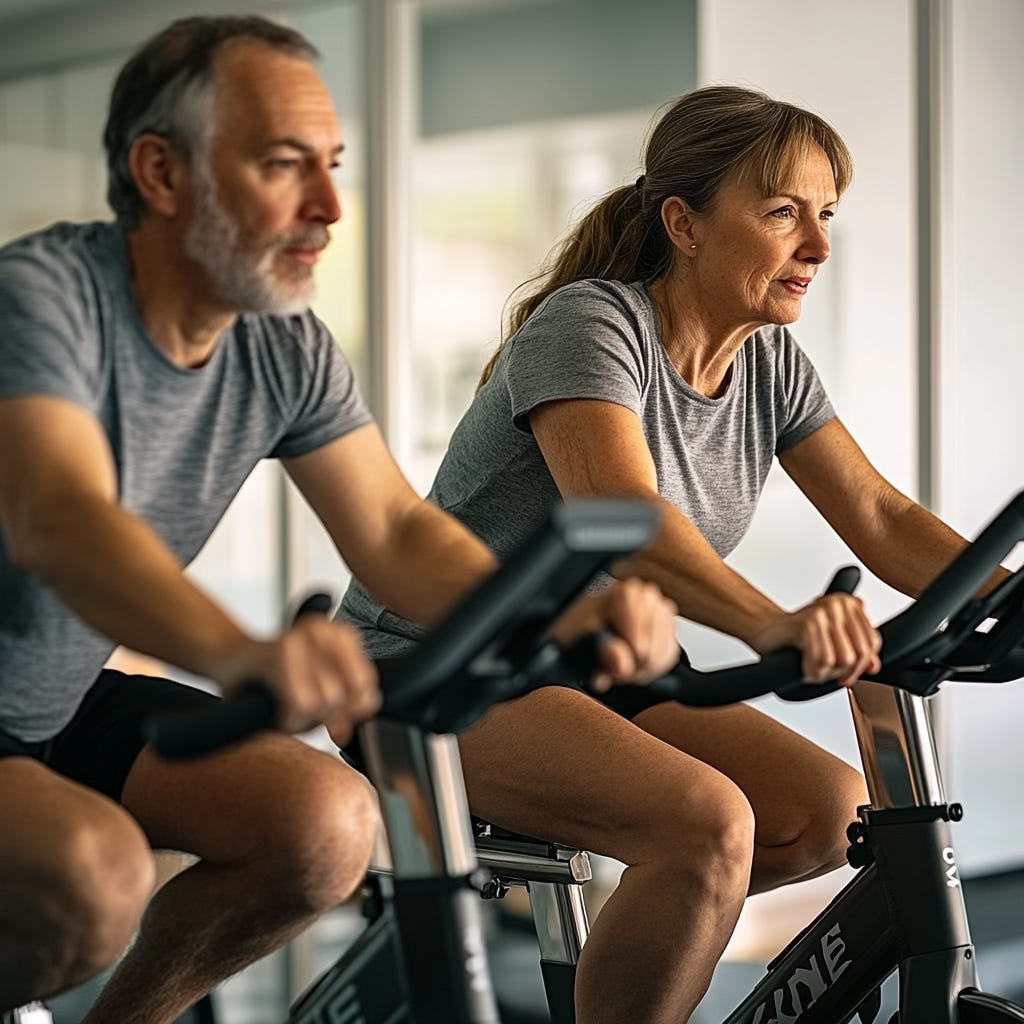
My goal is to complete one Zone 5 workout each week. I do this using an indoor exercise bike. I warm up for three minutes, then complete four sets of three minutes of high intensity biking followed by three minutes of rest.
But I didn’t start there. My first Zone 5 workout was a warmup plus 30 seconds all out. That’s it. Not impressive, but it was a start. The next week, I did two 30-second intervals. Then three. Then I bumped it up to one minute. It didn’t take too long to work up to where I am now.
I now look forward to these workouts, and while I’m confident they’re supporting my long-term brain health, I know they make a different in the short term. I feel mentally sharper and emotionally balanced when I consistently do my Zone 5 workout. I can say with 100% confidence that these workouts boost my mood, too.
Practical Takeaways
High-intensity workouts can trigger lactate that then boosts BDNF. BDNF is crucial for memory, learning, and brain adaptability. Even brief bursts of effort can improve brain plasticity.
Dementia prevention is multifaceted. Exercise—and lactate—are important, but not the whole story.
Lactate may fill an energy gap as glucose metabolism declines with age.
Short-term benefits matter—Zone 5 workouts can enhance mood and mental sharpness right away.
Final Thoughts
Your brain doesn’t just need oxygen and nutrients—it thrives on the physiological stress-and-recovery cycles that exercise provides. High-intensity intervals might feel tough in the moment, but they may be one of the most effective tools we have for protecting brain function as we age.
I am not a doctor or healthcare provider. This content is for general informational purposes only and is not intended as a substitute for professional medical advice, diagnosis, or treatment. I do not claim to have expertise in health, medicine, or wellness, and the content shared here should not be used to make decisions about your health or well-being. This information may provide ideas about topics to discuss with your medical team.
Always consult with a qualified healthcare provider for any questions or concerns regarding your health. Do not disregard professional medical advice or delay seeking it based on the information you have read here. Reliance on any information provided here or linked to from here is solely at your own risk.
I make no warranties about the completeness, reliability, or accuracy of the information presented.
I’ve been doing HITT on an elliptical, going as fast as I can for at least 30secs, sometimes, longer and do as many sets as I can in 15-20 mins, the rest of the hour is spent doing moderate zone 2. I do this for heart health but now see that there are other significant benefits. Thank you.
Great post! I know many people will relate to being reluctant to start exercising, but knowing the benefits such as "keeping your marbles" can be a great motivator. I also like how you shared how you started yourself, showing that it doesn't have to be overwhelming, just start with what you can do, no matter how short, and build up from there. Empowering advice :)